


The Korangi Association of Trade and Industry (KATI) and the Environment, Climate Change and Coastal Development Department Government of Sindh, along
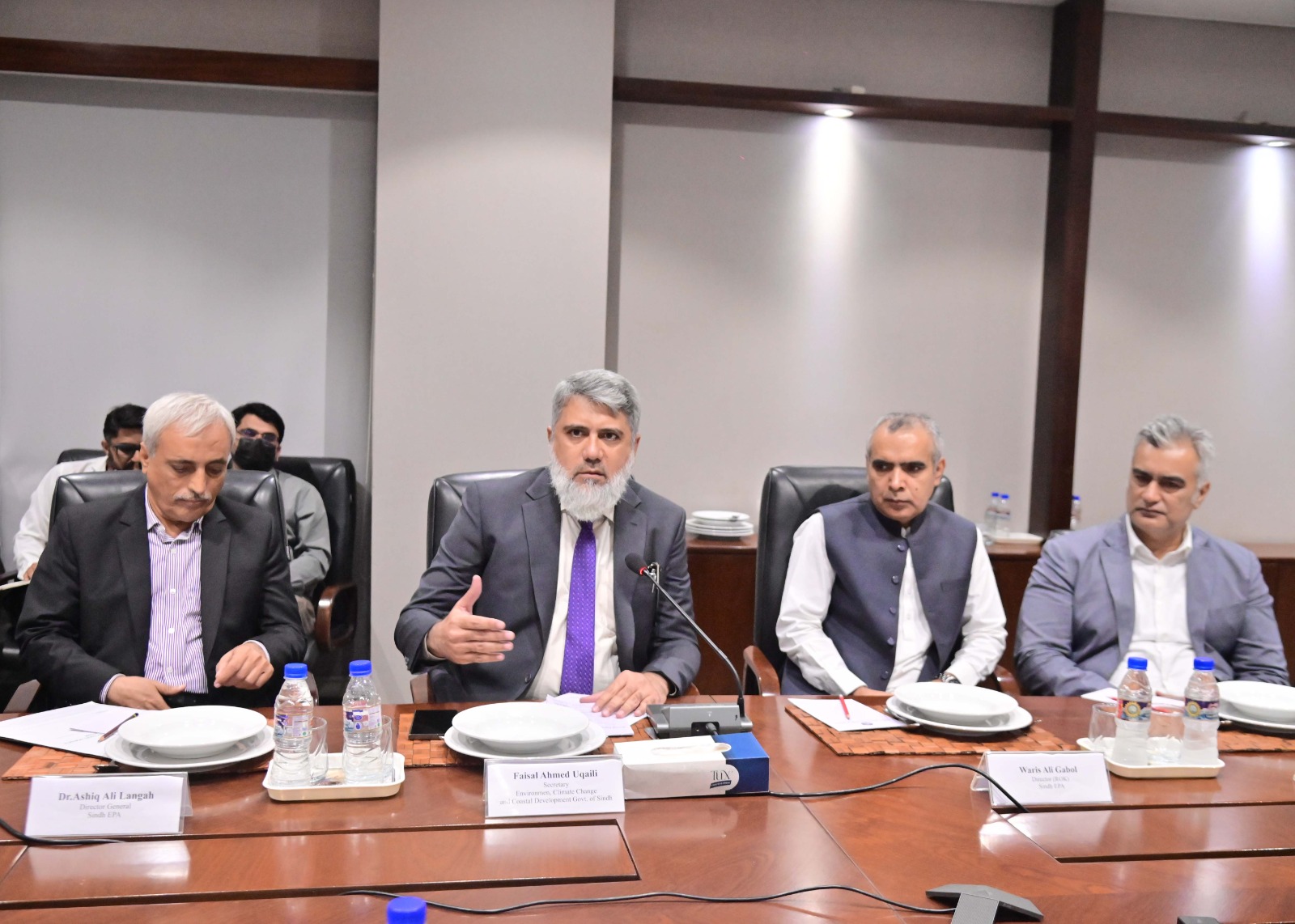
The Korangi Association of Trade and Industry (KATI) and the Environment, Climate Change and Coastal Development Department Government of Sindh, along
Posted on: 09 Sep 2026 Tags:_*PRESS RELEASE*_
*Pledge to strengthen cooperation on industrial compliance*
KARACHI, Sept 8, 2026: The Korangi Association of Trade and Industry (KATI) and the Environment, Climate Change and Coastal Development Department Government of Sindh, along with the Sindh Environmental Protection Agency (SEPA), agreed on Monday to work more closely together to improve environmental compliance in the industrial sector while ensuring that business and industrial growth is not hampered in the process.
The understanding was reached at a meeting held at the KATI office, Korangi, where Secretary Environment, Climate Change and Coastal Development, Faisal Ahmed Uqaili, was the chief guest. He was accompanied by SEPA Director General Dr Ashiq Ali Langah and a delegation of the agency's directors and deputy directors.
The visiting officials were received by KATI President Mohammad Ikram Rajput, Patron-in-Chief Mohammad Zubair Chaya, Chairman of the Health, Safety and Environment Standing Committee Salimuzzaman, Vice President Talha Ali, and other office bearers and members of the association.
The meeting discussed a range of issues of mutual interest, with the discussion centred on how KATI and SEPA could jointly ensure compliance with environmental laws and regulations without slowing down business and industrial activity.
Speaking on the occasion, Faisal Ahmed Uqaili said the Environment Department was working on several key matters with defined timelines, and that an interactive and participatory approach was being adopted by bringing all relevant climate change and environmental stakeholders on board.
He said greater coordination was needed between the department and industry on industrial monitoring and pollution control, so that the scope for complaints and misunderstandings between industry and the regulator could be minimised. He added that the goal should not simply be to compel industries to comply with environmental laws; rather, a mechanism should be developed that allows industries to meet environmental requirements while continuing their business and industrial growth.
To this end, he proposed setting up a framework under which representatives of industries, industrialists and SEPA officers responsible for industrial monitoring would coordinate through a WhatsApp group, enabling timely contact and guidance on industrial monitoring, environmental compliance and other related matters.
Uqaili also told the industrialists present that SEPA's entire industrial compliance framework was soon going to be digitised, under which every stage of a case, from the serving of the first notice to the final action taken, would be made accessible online so that the concerned industry could track the status of its case at any time. He added that a complaint redressal committee had already been constituted within SEPA to keep a watch on all industrial compliance cases and ensure their prompt disposal.
The secretary also briefed participants on other initiatives of the Environment Department and SEPA. He said SEPA was currently facilitating the United Nations Industrial Development Organisation (UNIDO) in bringing small and medium enterprises (SMEs) in five districts of Sindh into an environmental compliance framework. Under this initiative, the challenges faced by these SMEs would first be identified, after which technical guidance and support would be provided to help address them before the businesses are brought into the formal compliance framework. SEPA, he said, was playing the role of a facilitator throughout this process.
Uqaili further said work was under way on a memorandum of understanding with the Aga Khan University Hospital, aimed at establishing long-term cooperation in areas where the two institutions could support each other in environmental rehabilitation, improvement and protection.
On carbon credits, he said 13 carbon credit generation projects had so far emerged in Sindh. Initial scrutiny of these projects and a review of their compliance with relevant laws and regulations had been completed, following which they were forwarded to the Federal Ministry of Climate Change and Environmental Coordination. He added that various stakeholders were also being engaged to expand work in carbon financing, given the significant potential the sector holds, which could ultimately contribute to climate change mitigation and a reduction in greenhouse gas emissions.
Director General SEPA Dr Ashiq Ali Langah, in his remarks, invited KATI to remain associated with SEPA's industrial monitoring process on an ongoing basis. He said KATI's involvement at this stage would help keep the association updated on the status of monitoring activities being carried out across various industrial sectors, and would also provide a direct channel through which industry could stay informed of developments concerning compliance and monitoring on a continuing basis. He said this arrangement would help build mutual trust between industry and the regulator and would make the entire monitoring process more transparent for all stakeholders involved.
Earlier, KATI representatives spoke in detail about the challenges facing different industrial sectors in meeting environmental compliance requirements.
Patron-in-Chief Mohammad Zubair Chaya said a practical mechanism needed to be developed to make environmental compliance easier for industries. Instead of lengthy and complicated procedures, he said, there should be simple and clear procedures at each stage of compliance, whether for new development projects or for implementation of Environmental Management Plans in existing business and industrial operations.
President Mohammad Ikram Rajput gave an initial overview of the problems faced by industries in the Korangi Industrial Area, particularly the difficulties in installing individual treatment plants. He said that despite various business and operational challenges, industries were making every effort to ensure environmental compliance, and stressed the need for close and continuous contact between KATI and SEPA to ensure better implementation of environmental laws.
Salimuzzaman, Chairman of the Health, Safety and Environment Standing Committee, pointed out that manufacturing and production processes vary considerably across industries, yet their environmental monitoring SOPs and procedures are often kept uniform. He said monitoring and compliance requirements should instead be determined according to the nature and production processes specific to each industry.
The meeting agreed that this matter would be taken up further, with consultations to continue on developing a monitoring and compliance mechanism tailored to the specific production and manufacturing processes of different industrial sectors.
The meeting concluded with an understanding that KATI, the Environment Department and SEPA would develop a basic framework for cooperation and coordination on industrial environmental compliance, monitoring and pollution control, with the aim of improving implementation of environmental laws while facilitating continued industrial and business growth.
Back

 Plot # ST-2/1, Sector-23, Korangi Industrial Area, Near Shan Chowrangi, Karachi, Sindh

 021-99333572
 09:00 A.M to 05:00 P.M
2026 © Sindh Environmental Protection Agency